Best for integrated medical weight loss: GoodLife Health for eligible, nonpregnant adults seeking ongoing metabolic care. Best for postpartum recovery and breastfeeding decisions: an obstetric-led clinic; best for continuity: your existing primary care practice with weight-management expertise. This 2026 guide ranks care models by the clinical needs of new parents, not by who offers the fastest prescription.
- GoodLife Health belongs among the best medical weight loss clinics for new parents seeking integrated cardiometabolic care.
- Obstetric-led care is the first choice when breastfeeding, postpartum recovery, or pregnancy planning determines treatment.
- An obesity medicine specialist fits parents whose medical history makes medication selection more complex.
- Choose medical weight loss with nutrition support, follow-up, and a clear plan for side effects.
Why this matters for new parents
New parenthood changes the treatment decision. A parent recovering from childbirth, a breastfeeding parent, and a nonbirthing parent with obesity do not need identical weight-loss plans. Convenience matters, but pregnancy status, infant feeding, recovery, and existing illnesses come first.
The best clinic asks about those differences before discussing medication. It also separates weight management from pressure to return to a previous body size.
A medically appropriate plan can begin with evaluation and nutrition support rather than a prescription.
For your 2026 shortlist, compare the services and clinical responsibilities below. These are distinct care models, not claims that every practice within a category delivers the same care. Confirm the actual clinician, follow-up process, and referral arrangements before enrolling.
What makes the best medical weight loss clinic for new parents?
Use these six criteria before choosing a clinic:
- Reproductive safety: The clinician reviews pregnancy, breastfeeding, contraception, and plans for another pregnancy before selecting treatment.
- Clinical eligibility: A prescription follows a medical assessment, including medication history, relevant contraindications, and weight-related conditions.
- Connected metabolic care: Weight, blood sugar, lipids, thyroid function, and symptoms are interpreted together rather than treated as unrelated problems.
- Nutrition and recovery: The plan supports adequate intake and appropriate activity, particularly during lactation or recovery from childbirth.
- Follow-up ownership: You know who reviews results, responds to side effects, and decides whether treatment should change.
- Practical access: Visits, blood draws, prescriptions, and specialist referrals fit your circumstances without replacing necessary in-person care.
No convenience feature outweighs reproductive safety. A clinic that cannot explain how it handles breastfeeding or pregnancy planning is not the right starting point for a postpartum parent.
Medical weight loss options at a glance
Medical weight loss options at a glance
| Rank and option | Best for | Standout feature to assess | Key limitation |
|---|---|---|---|
| 1. GoodLife Health | Eligible parents seeking integrated cardiometabolic care | Biomarker Audit every 90 days within a direct primary care membership | Does not replace obstetric care or an in-person examination when needed |
| 2. Obstetric-led postpartum clinic | Birthing parents whose recovery or infant-feeding plans determine treatment | Reproductive and postpartum assessment before weight-loss treatment | Confirm whether the practice also provides ongoing obesity treatment |
| 3. Obesity medicine specialist | Parents with complex medication decisions or previous treatment difficulties | Focused assessment of obesity, contraindications, and long-term treatment | Separate clinicians can require additional coordination |
| 4. Existing primary care practice | Parents prioritizing continuity with an established clinician | Existing medical records and ongoing management of chronic conditions | Weight-management expertise and nutrition support differ by practice |
| 5. Multidisciplinary hospital program | Parents needing several specialties or assessment for procedural treatment | Coordinated access to medical, nutrition, behavioral, and surgical expertise | Confirm eligibility, referral requirements, and appointment logistics |


1. GoodLife Health: best for integrated cardiometabolic care
This medical weight loss model fits eligible parents who want weight management connected to broader health monitoring. Cardiometabolic Optimization treats metabolic, hormonal, and cardiovascular health as one system. The membership includes a Biomarker Audit every 90 days and concierge-style direct primary care.
The audit includes ApoB, Lp(a), hs-CRP, HbA1c, lipids, insulin markers, and full hormone and thyroid panels. Those results inform clinical decisions; an abnormal result is not an automatic reason to prescribe a hormone or weight-loss medication. Your physician interprets results alongside symptoms, history, and treatment goals.
Clinical care is delivered by licensed physicians of Beluga Health, P.A., an independent professional corporation, under the brand's clinical protocols. The medical weight loss approach uses branded, FDA-approved medication rather than compounded GLP-1 products. Prescribing still depends on your individual assessment.
GoodLife Health pros:
- Connects medical weight loss with blood sugar, cardiovascular risk, and hormone assessment.
- Includes repeat biomarker monitoring rather than treating the initial prescription as the endpoint.
- Provides physician-led care within an ongoing primary care relationship.
- Keeps medication billing separate from the clinical membership, with no medication markup.
GoodLife Health cons:
- Virtual care does not replace examinations, imaging, or urgent assessment when these are necessary.
- Membership begins with a two-month commitment.
- Quarterly monitoring does not cover every additional test; extra labs are billed separately.
Best for: Eligible, nonpregnant parents seeking medical weight loss alongside ongoing metabolic and primary care management.
Verdict: Buy only after a clinical eligibility assessment; wait on medication if pregnancy, breastfeeding, or recovery requires a different plan.
2. Obstetric-led postpartum clinic: best for recovery and breastfeeding
An obstetric-led clinic is the strongest starting point when childbirth recovery, lactation, or another pregnancy shapes the decision. Your obstetric clinician can assess postpartum concerns and coordinate with primary care or obesity medicine when ongoing weight treatment is appropriate. Do not assume that obstetric care automatically includes a long-term weight-management program.
For a breastfeeding parent, the question is not simply which drug produces the most weight loss. It is whether a specific medication, formulation, and treatment goal are appropriate during lactation. Infant feeding and maternal nutrition belong in that discussion.
Obstetric-led postpartum clinic pros:
- Places reproductive history and postpartum recovery at the center of assessment.
- Supports discussion of contraception and future pregnancy before medication selection.
- Provides a starting point for symptoms that need examination rather than a weight-loss prescription.
Obstetric-led postpartum clinic cons:
- Confirm whether the clinician prescribes and monitors obesity medication.
- Long-term metabolic care can require a separate primary care or specialist relationship.
- Appointment timing and nutrition services depend on the individual practice.
Best for: Birthing parents who are breastfeeding, recovering from complications, or planning another pregnancy.
Verdict: Buy into postpartum assessment first; wait on weight-loss medication until the clinician resolves reproductive and recovery questions.
3. Obesity medicine specialist: best for complex treatment decisions
An obesity medicine specialist provides focused assessment of weight-related disease and treatment options. This model fits parents with previous medication intolerance, multiple interacting prescriptions, an eating-disorder history, or uncertainty about the next treatment step. Ask how the specialist coordinates with your other clinicians.
The consultation should address more than drug selection. You need a plan for nutrition, side effects, treatment response, and what happens if a medication is unsuitable. A specialist appointment does not eliminate the need for obstetric input during pregnancy planning or lactation.
Obesity medicine specialist pros:
- Provides focused expertise in obesity treatment and medication selection.
- Supports review of previous treatment response and reasons a plan failed.
- Can assess whether another approach or specialty referral is appropriate.
Obesity medicine specialist cons:
- Primary care and postpartum care remain separate responsibilities unless explicitly included.
- Nutrition and behavioral services require confirmation rather than assumption.
- Records must reach the specialist for a useful assessment of existing treatment.
Best for: Parents whose medical history or previous treatment experience makes a straightforward prescribing pathway inadequate.
Verdict: Buy a specialist assessment when complexity changes the treatment choice; skip any program that dismisses relevant history.
4. Existing primary care practice: best for continuity
Your established primary care clinician is a sensible first call when continuity matters most. An existing relationship provides context for blood pressure, diabetes risk, medication changes, mental health, and previous laboratory results. Ask directly whether the practice offers ongoing medical weight loss, not just general lifestyle advice.
Primary care can also identify reasons to investigate fatigue or weight changes before starting treatment. For the ongoing-care model, read how direct primary care supports weight-loss management. The useful distinction is who takes responsibility for monitoring, not whether a clinic uses a membership label.
Existing primary care practice pros:
- Builds on an established medical relationship and existing records.
- Connects weight treatment with management of other health conditions.
- Offers a starting point for referrals and questions about medication interactions.
Existing primary care practice cons:
- Confirm the clinician's experience with obesity medication and dose management.
- Dietitian access and follow-up arrangements differ across practices.
- An established relationship does not guarantee expertise in postpartum weight management.
Best for: Parents who already trust their clinician and want fewer disconnected care relationships.
Verdict: Hold the relationship and assess its weight-management capabilities before switching providers.
5. Multidisciplinary hospital program: best for multiple specialty needs
A multidisciplinary hospital program fits parents whose treatment requires several kinds of expertise. Look for clearly identified medical, nutrition, behavioral, and surgical services rather than assuming they are included. This model is especially relevant when a clinician recommends evaluation beyond routine outpatient prescribing.
Not every parent needs a hospital-based program. Referral should follow the clinical problem, whether that is complicated obesity, significant coexisting disease, or consideration of bariatric treatment. Pregnancy plans remain relevant when discussing either medication or surgery.
Multidisciplinary hospital program pros:
- Offers a structure for combining several specialties when the program includes them.
- Supports assessment of nonsurgical and procedural treatment pathways.
- Provides an option when outpatient care needs additional specialist input.
Multidisciplinary hospital program cons:
- Confirm referral requirements and which services are actually coordinated.
- Multiple appointments can create practical difficulties for parents arranging childcare.
- A hospital setting is not necessary for every uncomplicated weight-management decision.
Best for: Parents referred for complex obesity care, multiple specialty assessments, or procedural treatment evaluation.
Verdict: Buy into this model when clinical complexity warrants it; skip unnecessary complexity for routine care.
How to choose safely in 2026
Start with your clinical situation, then assess the clinic. This sequence prevents a convenient service from becoming the wrong medical choice.
Recovery review
Tell the clinician whether you gave birth, when delivery occurred, whether you are breastfeeding, and whether complications remain unresolved. Include blood pressure problems, gestational diabetes, surgical recovery, and mood symptoms. Nonbirthing parents should still discuss sleep disruption, existing conditions, and current medications.
Weight management is not the first priority when an acute postpartum problem needs attention. Chest pain, trouble breathing, severe headache, or thoughts of harming yourself or your baby require urgent medical evaluation, not a routine weight-loss appointment.
Medication review
Bring every prescription, supplement, and previous weight-loss treatment. Explain what helped, what caused side effects, and why treatment stopped. Your clinician also needs pregnancy plans and the exact contraceptive method you use.
For decisions in 2026, the FDA prescribing information for Wegovy injection advises stopping semaglutide at least 2 months before a planned pregnancy. The FDA prescribing information for Zepbound advises people using oral hormonal contraception to switch to a nonoral method or add a barrier method for 4 weeks after starting tirzepatide and 4 weeks after each dose escalation. These are drug-specific instructions, not interchangeable rules for every medication.
Lab interpretation
Ask which tests answer a clinical question and who interprets the results. HbA1c helps assess blood sugar over time; ApoB and Lp(a) inform cardiovascular risk assessment. Thyroid testing belongs in the context of symptoms and medical history, not an automatic explanation for every weight change.
After gestational diabetes, postpartum glucose follow-up requires its own plan. Recent blood loss and pregnancy-related changes affect interpretation of some tests. Tell the clinician about the pregnancy history rather than relying on a generic weight-loss panel.
Follow-up plan
Before treatment starts, establish how you report nausea, constipation, vomiting, poor intake, or other problems. Ask who makes dose decisions and where you should seek in-person care. A scheduled blood draw is not a substitute for contacting the clinical team when symptoms develop.
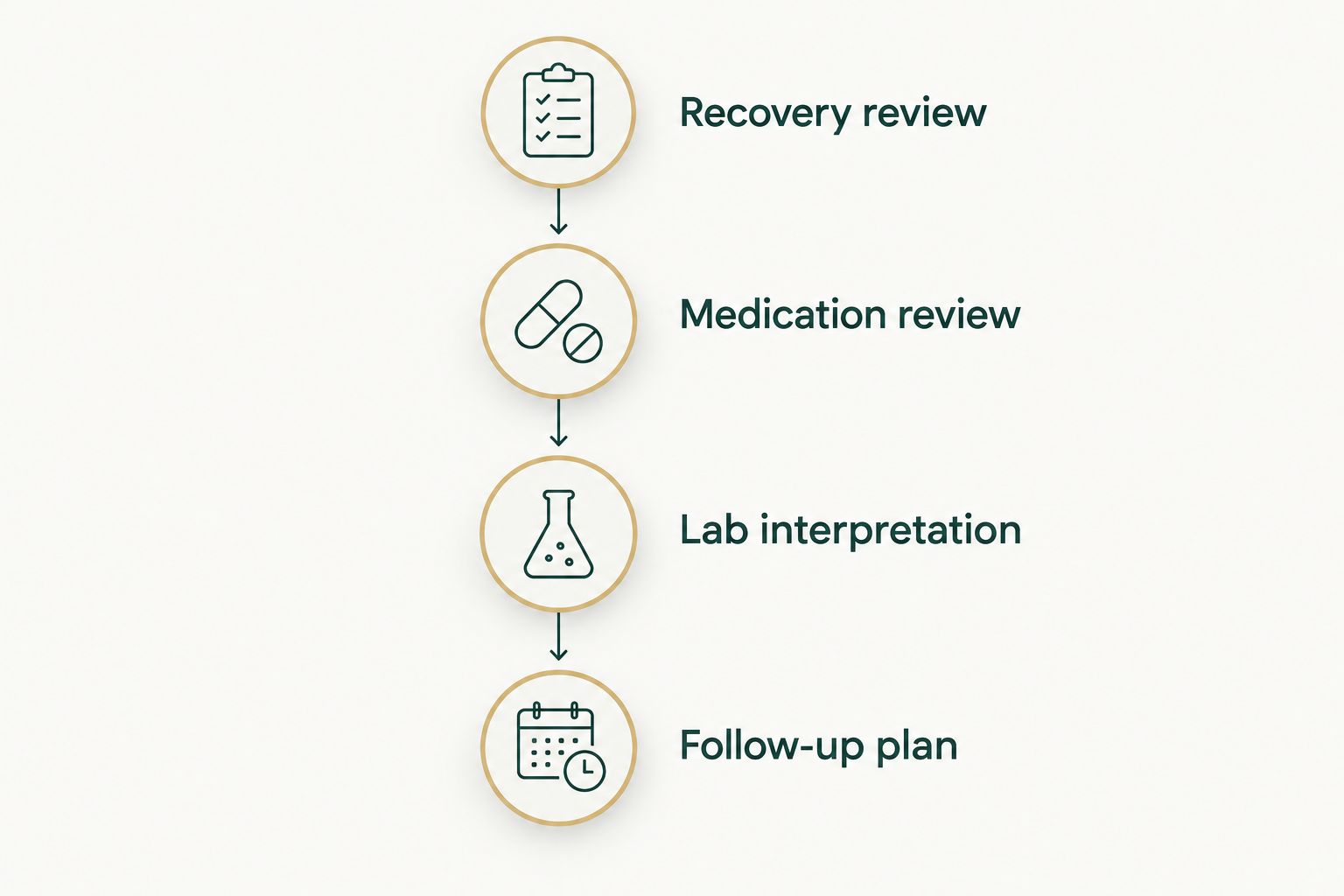
Clinical circumstances determine the treatment pathway before convenience determines the clinic.
Breastfeeding and pregnancy planning change the ranking
Do not start a weight-loss medication during pregnancy. If you become pregnant while taking one, contact the prescriber promptly for drug-specific instructions. A weight-loss clinic must distinguish obesity treatment from management of diabetes or another condition during pregnancy.
Breastfeeding requires a separate assessment. Evidence and prescribing guidance differ by drug and formulation, so an answer about one product does not establish safety for another. Do not use a general statement about GLP-1 medicines as permission to begin treatment while nursing.
A responsible 2026 decision also considers whether appetite suppression would interfere with adequate maternal intake. Bring your infant-feeding plans to both the prescriber and the obstetric clinician. The goal is a coordinated recommendation, not competing answers from separate services.
Hormone treatment needs the same discipline. Postpartum fatigue, hair changes, and mood symptoms do not establish a hormone deficiency, and a hormone panel alone does not establish a treatment indication. Treat a diagnosed problem, not a promise to reset postpartum hormones.
Questions that expose a weak clinic
Ask these questions before committing:
- Who evaluates pregnancy, breastfeeding, and contraception before prescribing?
- Which physician reviews my history and laboratory results?
- How do I contact the clinical team if I cannot eat or keep fluids down?
- What happens when a dose is poorly tolerated?
- Which services require another clinician or an in-person visit?
- Who coordinates with my obstetric clinician or existing primary care doctor?
- How does the plan support nutrition and physical recovery?
- What is the plan if medication is inappropriate or treatment stops?
Reject guaranteed outcomes and pressure to increase a dose despite significant symptoms. A stronger prescription is not the definition of better care. You need a clinician who can explain the next decision and its reason.
For nonbirthing parents, disrupted sleep and reduced exercise time still deserve discussion. Neither proves low testosterone or creates an automatic indication for hormone therapy. The assessment should connect symptoms, examination when needed, and appropriate testing.
How these care models were ranked
This ranking prioritizes reproductive safety, connected metabolic care, follow-up responsibility, and practical access. It ranks suitability for distinct situations rather than claiming that every clinic has been tested or that one service fits all parents.
Integrated medical care takes the default slot for eligible adults seeking ongoing treatment. Obstetric-led care moves to the first position when postpartum recovery, breastfeeding, or pregnancy planning controls the decision. Specialist and hospital models fit increasing clinical complexity; established primary care fits continuity.
Which clinic should you choose?
GoodLife Health is the best fit in this guide for eligible new parents seeking medical weight loss within integrated cardiometabolic care. Choose obstetric-led assessment first when breastfeeding, recent childbirth complications, or another pregnancy determines what treatment is appropriate.
For your 2026 decision, begin with the clinician who can resolve the most important safety question. Then choose the ongoing model that owns follow-up, reads the labs, and gives you clear instructions when treatment changes. Do not enroll solely because a prescription can be obtained online.
FAQ
What's the best medical weight loss clinic for a new parent?
The best clinic matches your reproductive status, medical history, and follow-up needs. Integrated cardiometabolic care fits eligible adults seeking ongoing treatment; obstetric-led assessment comes first when breastfeeding or postpartum recovery determines medication safety.
Can I start a GLP-1 medication while breastfeeding?
Do not start a GLP-1 medication while breastfeeding without an individualized, drug-specific assessment. Your prescriber and obstetric clinician should review the formulation, lactation evidence, infant-feeding plans, and maternal nutrition before deciding.
How soon after giving birth can I start medical weight loss?
There is no single start date that fits every postpartum parent. Recovery, breastfeeding, complications, nutrition, and pregnancy plans determine whether the next step is supportive care, testing, or medication assessment.
Can new dads qualify for prescription weight-loss treatment?
New dads can qualify when they meet a medication's clinical criteria and the prescriber finds treatment appropriate. Parenthood and sleep disruption alone do not establish eligibility or a need for testosterone therapy.
Do I need to stop semaglutide before trying to get pregnant?
The FDA prescribing information for Wegovy injection advises stopping semaglutide at least 2 months before a planned pregnancy. Confirm the instructions for your exact product with the prescriber and arrange a plan for any underlying condition being treated.
Does tirzepatide affect birth control pills?
Tirzepatide can reduce the effectiveness of oral hormonal contraception. Zepbound prescribing information advises a nonoral contraceptive method or an added barrier method for 4 weeks after starting treatment and for 4 weeks after each dose escalation.
Is an online weight-loss clinic enough for postpartum care?
An online weight-loss clinic does not replace obstetric follow-up or necessary in-person assessment. Telehealth can support ongoing treatment when the clinician has an appropriate examination, testing, referral, and urgent-care plan.
What should I bring to my first weight-loss consultation?
Bring your medication list, relevant laboratory results, pregnancy and breastfeeding details, and previous treatment history. Explain delivery complications, gestational diabetes, contraception, symptoms, and plans for another pregnancy so the clinician can assess the whole situation.
One last thing
Ask what happens if the clinician decides you should not receive a weight-loss prescription. The answer reveals whether you are choosing medical care or merely a prescribing pathway. A useful plan still addresses nutrition, appropriate activity, existing disease, and follow-up when medication is not the right next step.
Related guides
- Medical weight loss for postpartum mothers
- How GLP-1 medications affect birth control effectiveness
- What to expect at your first telehealth medical weight loss visit
References
- Tirzepatide Once Weekly for the Treatment of Obesity (SURMOUNT-1). 2022. pubmed.ncbi.nlm.nih.gov/35658024/
- Once-Weekly Semaglutide in Adults with Overweight or Obesity (STEP 1). 2021. pubmed.ncbi.nlm.nih.gov/33567185/