You want the benefits of testosterone treatment without discovering that staying on it creates a different health problem. How long can you safely stay on TRT when feeling better now may mean accepting risks nobody has explained? You can stay on TRT for years, sometimes for life, when you have confirmed testosterone deficiency, meaningful benefit and ongoing safety monitoring. There is no universal safe time limit. Your first prescription is no lifetime guarantee. Continuing treatment is a clinical decision made again at each review.
- How long can you stay on TRT? Years or lifelong, when confirmed deficiency, benefits and monitoring support continued treatment.
- Testosterone replacement therapy requires monitoring of hematocrit, testosterone levels, blood pressure, symptoms and prostate health when appropriate.
- TRT suppresses sperm production. Discuss fertility before starting or continuing treatment.
- GoodLife Health combines hormone optimization with cardiometabolic primary care and a Biomarker Audit every 90 days.
How long can you safely stay on TRT?
TRT has no standard expiration date. For a man with permanent testicular or pituitary disease, replacement can remain necessary indefinitely. When low testosterone relates to potentially reversible factors, treatment duration requires reassessment as those factors change.
The practical question in 2026 is not whether you have reached an arbitrary anniversary. It is whether the diagnosis remains sound, treatment improves the symptoms it was prescribed for and the safety findings still support it.
Clinical situation and treatment duration
What changes the plan
| Clinical situation | What it means for duration | Main limitation |
|---|---|---|
| Confirmed permanent testosterone deficiency | Long-term or lifelong replacement can be appropriate | Monitoring remains necessary even after years of stability |
| Low testosterone associated with potentially reversible factors | Reassess the need as underlying health changes | Improvement does not guarantee natural production will recover |
| Testosterone levels improve but symptoms do not | Reconsider the diagnosis and value of continued treatment | A better laboratory number alone is not sufficient benefit |
| Significant adverse effects or a new contraindication | Adjust, interrupt or discontinue treatment under medical supervision | Continuing the same prescription can expose you to avoidable harm |
| Current or near-term fertility goals | Reconsider exogenous testosterone with a reproductive specialist | TRT suppresses sperm production |
At GoodLife Health, we organize care around the relationship between hormones, metabolic health and cardiovascular health. That broader view matters when a prescription is expected to continue for years.
Why this matters: reassurance needs a monitoring plan
The pain is familiar: you feel better on treatment, but nobody has clearly explained what makes another refill safe. The fear is that a rising hematocrit, worsening blood pressure or a fertility problem will be missed while attention stays fixed on testosterone alone.
The better outcome is specific. You know why you are taking TRT, what your clinician is monitoring and which findings would change the plan. You also know what your care costs before committing to ongoing treatment.
Our Cardiometabolic Optimization Membership is $299 per month, with a two-month initial commitment and a $598 first charge. It includes a Biomarker Audit every 90 days. Medication is separate and billed by the pharmacy at its own price. The membership fee does not rise with your prescription or dose.
That separates the payment for clinical judgment from the amount of medicine prescribed. Additional laboratory testing beyond the quarterly cadence is ordered by the clinician when there is a reason and billed by the lab at its own rates, so medically necessary extra testing is not the same as unlimited included testing.
Permanent deficiency: treatment can be lifelong
When the testes cannot produce enough testosterone because of an established medical condition, replacement addresses an ongoing deficiency. Certain pituitary or hypothalamic disorders can also create a persistent need.
Continuing treatment does not mean the original dose stays correct forever. Aging, weight changes, other medications, sleep disorders and new illnesses can change the balance between benefit and risk.
Best for: men with a confirmed, persistent deficiency who benefit from replacement and can maintain follow-up. The advantage is sustained treatment of an established condition. The limitation is an ongoing obligation to monitor safety, symptoms and changing goals.
A diagnosis should not rest on fatigue alone. Clinical guidelines require compatible symptoms or signs alongside consistently low testosterone, generally confirmed with 2 separate morning blood tests before treatment. Your clinician also investigates why the level is low rather than treating the result as the entire diagnosis.


Potentially reversible low testosterone: reassess the cause
Obesity, some medications, acute illness and disrupted sleep can affect testosterone levels or produce symptoms that resemble testosterone deficiency. These findings require interpretation, not an automatic prescription.
For someone already taking TRT, meaningful changes in weight, sleep or medication use justify reviewing the original diagnosis. That review does not establish that stopping is safe or that natural production will recover.
Best for: men whose history suggests a treatable contributor and who want a physician-led reassessment. The advantage is identifying problems that testosterone alone does not solve. The limitation is that recovery is uncertain and cannot be inferred from improved health alone.
Our approach to hormone replacement therapy for men with low testosterone starts with the clinical problem, not a promise of permanent treatment. Never stop a prescribed regimen simply to test whether your body has recovered without discussing a plan with your clinician.
Continuing treatment is a repeated clinical decision, not a lifetime guarantee made at your first prescription.
Why safe TRT duration varies
The same length of treatment can be reasonable for one patient and inappropriate for another. These factors change the decision:
- Underlying diagnosis. Permanent hormone deficiency creates a different treatment need from a potentially reversible cause.
- Demonstrated benefit. Improvements in the symptoms being treated matter more than a higher laboratory result alone.
- Blood counts. Testosterone can increase red blood cell production and raise hematocrit.
- Cardiovascular health. Blood pressure, clotting history, symptoms and existing disease affect assessment.
- Fertility goals. Suppression of sperm production changes the treatment conversation before conception attempts begin.
- Ability to monitor. A prescription without reliable follow-up is not equivalent to monitored replacement therapy.
There is no calendar-based shortcut around these factors. A stable patient still needs reassessment, while a concerning result requires action even early in treatment.
What should your clinician monitor during long-term TRT?
A useful 2026 monitoring plan explains what gets checked, when it gets checked and what happens if a result changes. The Endocrine Society and American Urological Association provide clinical guidance on diagnosis, treatment response and surveillance. Neither treats a normal testosterone result as the entire safety assessment.
Testosterone levels and actual benefit
Blood-draw timing depends on the formulation and dosing schedule. An injection-related peak and a level drawn near the next dose are not interchangeable, so record when you last used the medication.
Your clinician interprets the result alongside symptoms and adverse effects. The goal is appropriate replacement, not the highest achievable testosterone level. Persistent fatigue or low libido despite adequate replacement calls for a broader evaluation rather than reflexive dose escalation.
Hematocrit and blood counts
A complete blood count helps identify excessive red blood cell production. Under Endocrine Society guidance, a hematocrit above 54% calls for stopping treatment until it falls to a safe level, evaluating contributors such as hypoxia or sleep apnea and reconsidering the dose before restarting.
Do not treat that threshold as a personal target or a reason to ignore a rising trend below it. A clinician must interpret the full picture. Repeated blood donation is not a substitute for investigating why hematocrit is increasing.
A hematocrit above 54% calls for stopping treatment until it falls to a safe level, evaluating contributors such as hypoxia or sleep apnea and reconsidering the dose before restarting. A clinician must interpret the full picture. Repeated blood donation is not a substitute for investigating why hematocrit is increasing.
Blood pressure and cardiovascular symptoms
Measure blood pressure and report changes in exercise tolerance, swelling, palpitations or breathing. Testosterone products carry blood-pressure considerations and cardiovascular risk cannot be reduced to whether your testosterone result is within range.
Chest pain, sudden shortness of breath, one-sided leg swelling or stroke symptoms require urgent evaluation. Do not wait for a routine telehealth appointment or the next scheduled laboratory draw.
Prostate health and urinary symptoms
Prostate monitoring depends on age, individual risk, screening decisions and clinical findings. Your clinician should explain whether prostate-specific antigen testing is appropriate and how changes would be evaluated.
A PSA change does not diagnose cancer, but it can require investigation. New urinary difficulty or other concerning symptoms should prompt contact rather than waiting for an annual review.
How often should long-term TRT be reviewed?
Endocrine Society guidance includes reassessing testosterone and hematocrit approximately 3–6 months after treatment begins, with ongoing monitoring thereafter. Timing changes with formulation, dose adjustments, abnormal findings and individual risk.
That is a clinical framework, not permission to wait when symptoms appear. An elevated hematocrit or new blood-pressure problem can require earlier testing and a different plan.
For our 2026 membership, the included Biomarker Audit occurs every 90 days or 4 times per year. The panel includes Hs-CRP, Comprehensive Metabolic Panel, TSH With Reflex To Free T4, Fasting Insulin, Lipoprotein (A), Hemoglobin A1c (HbA1c), Lipid Panel, Standard, Apolipoprotein B (ApoB) and CBC (Includes Differential And Platelets). TRT-specific safety monitoring, including blood counts and prostate assessment when appropriate, still needs an explicit clinician-directed plan.
Quarterly testing is useful only when somebody interprets it and acts. Ask which findings would lead to dose adjustment, additional investigation, specialist referral or a supervised interruption.
What does the evidence establish about long-term safety?
Evidence supports carefully selected, monitored treatment. It does not establish risk-free lifetime use. The TRAVERSE trial, published in the New England Journal of Medicine, studied testosterone gel in men with symptoms, confirmed low testosterone and existing cardiovascular disease or elevated cardiovascular risk.
TRAVERSE found testosterone noninferior to placebo for its primary major cardiovascular-event outcome in that population. It also reported higher incidences of atrial fibrillation, acute kidney injury and pulmonary embolism in the testosterone group.
Those findings belong together. The trial does not prove that testosterone prevents cardiovascular disease, that every formulation has identical risks or that decades of treatment are harmless.
For a treatment decision in 2026, the long-term safety of TRT depends on distinguishing evidence from monitored replacement populations from claims about unrestricted testosterone use. A study of clinically selected patients cannot justify supraphysiologic dosing, skipped follow-up or assurances that treatment is safe for everyone.
Your own history still matters. Discuss previous blood clots, cardiovascular events, sleep apnea, prostate concerns and all medications before deciding whether continued therapy remains appropriate.
Can you stay on TRT for life?
Lifelong TRT can be appropriate for persistent, confirmed testosterone deficiency, provided treatment continues to deliver benefit and the safety assessment supports it. Lifelong need is not the same as a lifelong guarantee of eligibility for an unchanged prescription.
Your circumstances will change. Fertility plans, new illness, adverse effects or a revised diagnosis can justify changing course even after years of successful treatment.
The safest commitment is to ongoing reassessment. Ask your clinician to document the reason for treatment and the findings that would lead to a different recommendation.
Do you need to cycle off TRT to stay safe?
Routine cycling is not a standard safety strategy for medically indicated testosterone replacement. Replacement treats a deficiency. Periodically withholding it does not replace monitoring or correct an inappropriate dose.
Stopping can allow deficiency symptoms to return while the body's own hormone signaling remains suppressed. Restarting without supervision adds uncertainty about symptoms, laboratory timing and treatment response.
A planned interruption is different. Your clinician can recommend one to address adverse effects, reassess the diagnosis or coordinate fertility care. The reason and follow-up plan should be clear before a change.
What happens if you stop TRT after years of treatment?
Stopping TRT can lead to low testosterone symptoms while natural production recovers, if recovery occurs. There is no reliable universal recovery deadline, particularly when the original condition is permanent or fertility has been affected.
Exogenous testosterone suppresses the hormonal signals that support testicular testosterone production and sperm production. Recovery varies with the underlying diagnosis, treatment history, age and other health factors.
A discontinuation plan should cover Symptoms, Bloodwork, Fertility and Follow-up. Agree on whom to contact if symptoms become difficult and when reassessment will happen. Do not construct a self-directed medication regimen from online advice.
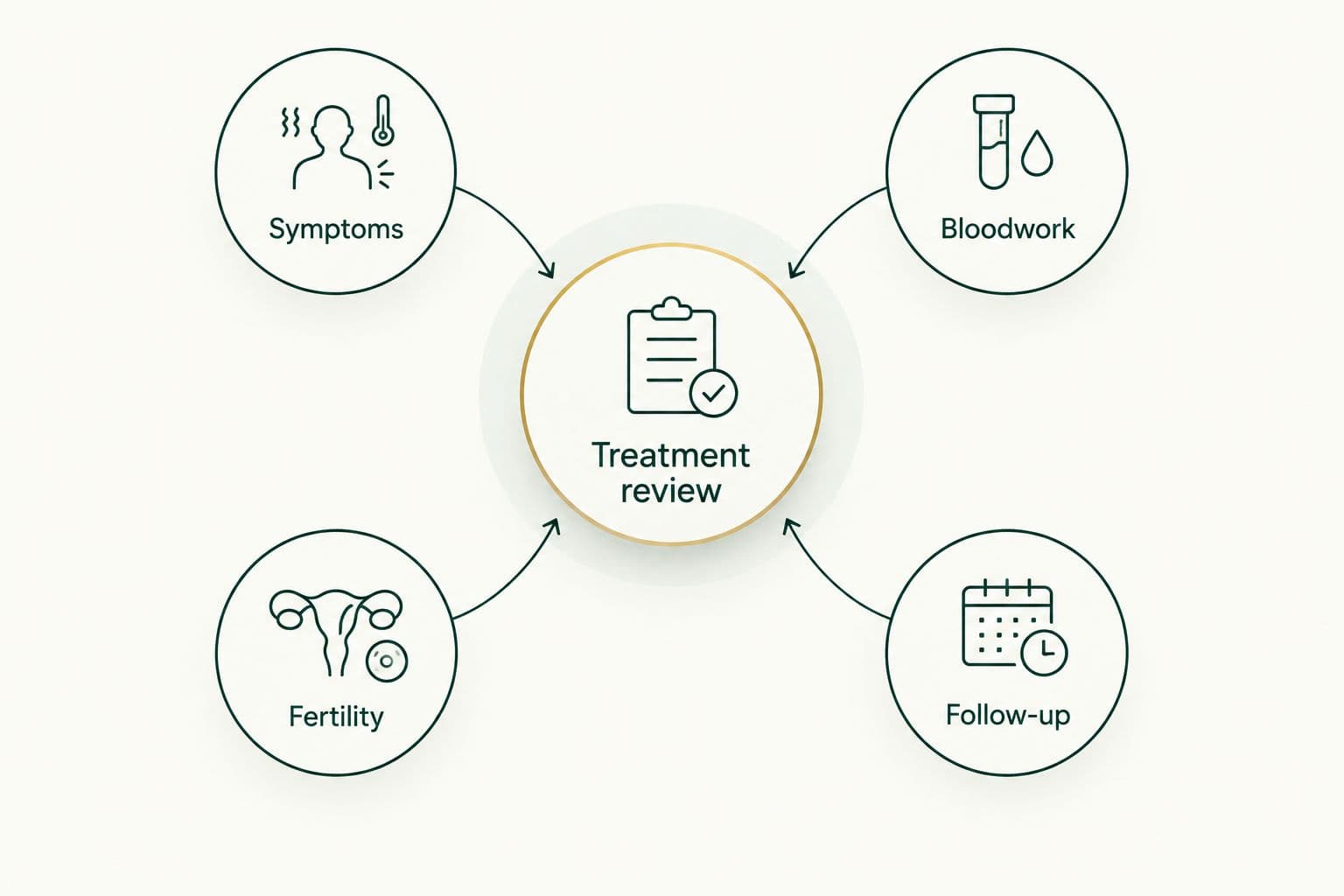
A supervised change in treatment needs more than a final prescription.
Treatment review should also revisit the original problem. If sleep apnea, thyroid disease, depression or another condition contributes to symptoms, stopping or continuing testosterone alone does not resolve the entire picture.
Fertility changes the long-term decision
TRT can substantially suppress sperm production, including to the point of no sperm being detected. A normal blood testosterone level while taking treatment does not establish normal fertility.
Discuss conception goals before starting therapy and whenever those goals change. If future fertility matters, your clinician can arrange reproductive evaluation and discuss whether semen testing or fertility preservation is appropriate.
Do not assume that adding another medication guarantees protection. Fertility-related treatment needs an individualized plan, often involving reproductive urology and recovery after stopping testosterone is not assured on a fixed schedule.
This is a reason for an early conversation, not shame or alarm. Your treatment plan should reflect the life you want, not just the symptoms you want relieved.
A long-term prescription needs a whole-system care model
GoodLife Health is best for men seeking physician-guided hormone optimization within ongoing cardiometabolic primary care. Our Cardiometabolic Optimization model treats metabolic, hormonal and cardiovascular health as one interconnected system rather than separating testosterone from weight, blood sugar, thyroid function and lipids.
Clinical care is delivered by licensed physicians of Beluga Health, P.A., an independent Florida professional corporation licensed to practice in all 50 states, working under GoodLife Health's clinical protocols. Laboratory services run through Quest Diagnostics.
The membership supports continuity, quarterly Biomarker Audits and review of the broader clinical picture. Its limits also matter: membership does not guarantee a testosterone prescription, eliminate medication costs, replace emergency care or make every additional test included.
The financial structure stays explicit: $299 per month, month to month. $598 is held at sign-up for the first two months and charged only once the clinician accepts you. If the clinician cannot accept you, the hold is released and you are never charged. Pharmacy charges remain separate, at pharmacy cost with zero markup. The membership is one flat fee. The fee is the same whatever the medication or dose.
If your concern is being left on autopilot, ask for a treatment review that connects your symptoms, original diagnosis, safety tests and future goals. Explore the membership and request a clinical evaluation rather than treating another refill as the entire plan.
What to bring to your next TRT review
A productive review starts with information your clinician can interpret. Bring your original diagnostic results if available, current prescription details, previous safety tests and a short description of what improved and what did not.
Include these details:
- Your formulation, prescribed schedule and the timing of your last dose before each blood draw.
- Changes in libido, energy, sexual function, mood, sleep or physical performance.
- Blood-pressure readings and any new swelling, breathing symptoms, acne or urinary problems.
- Current medications, supplements, sleep-apnea treatment and fertility plans.
Then ask one direct question: What would make you change or stop my treatment? A clear answer is more useful than reassurance based only on how long you have already taken testosterone.
FAQ
How long can you stay on TRT safely?
You can stay on TRT for years or potentially for life when you have confirmed testosterone deficiency, meaningful benefit and ongoing safety monitoring. There is no universal duration that guarantees safety or requires everyone to stop.
Is staying on TRT forever bad for you?
Lifelong TRT is not automatically inappropriate, but it carries ongoing risks and monitoring requirements. Persistent deficiency, symptom benefit, hematocrit, blood pressure, fertility goals and prostate considerations all affect whether continued treatment is appropriate.
References
- Treatment of Symptoms of the Menopause: An Endocrine Society Clinical Practice Guideline. 2015. doi.org/10.1210/jc.2015-2236
- Testosterone Therapy in Men with Hypogonadism: An Endocrine Society Clinical Practice Guideline. 2018. doi.org/10.1210/jc.2018-00229