Health sharing plans vs direct primary care is a comparison many people make when they are trying to lower healthcare costs outside traditional insurance, but the two are not really competitors. They solve different problems. A health sharing plan is a cost-sharing arrangement for large, unexpected medical bills. Direct primary care is a flat monthly membership for everyday access to a clinician. Used together, they can cover both ends of the spectrum, and understanding the difference keeps you from expecting one to do the other's job.
This guide explains what each one is, what each does not do, and why pairing them is a common strategy.
- A health sharing plan is not insurance; it shares eligible large medical expenses but does not guarantee payment.
- Direct primary care is a flat monthly membership covering everyday visits, messaging, and clinician-read labs, not catastrophic events.
- The two are designed to cover different ends of the spectrum: rare, large bills versus frequent, small needs.
- Pairing them can cost less than comprehensive insurance for relatively healthy people who want predictable monthly costs.
- Health sharing plans commonly exclude pre-existing conditions, which limits who this combination fits.
- GoodLife Health's Cardiometabolic Optimization Membership is $299 a month, with hormone optimization at $299 a month and medical weight loss at $299 a month.
What a health sharing plan is
A health sharing plan, sometimes called a healthshare or health care sharing ministry, is an arrangement where members contribute monthly and the pool shares eligible large medical expenses. It is important to be precise: a health sharing plan is not insurance. It is not regulated as insurance, it does not guarantee payment the way an insurance contract does, and eligible expenses are defined by the plan's own rules, which often exclude pre-existing conditions and certain categories of care.
What it does well is provide a lower-cost option for catastrophic protection, the big hospital bill from an accident or serious illness. What it does poorly is everyday care, because routine visits, chronic-condition management, and primary care are often not what the sharing pool is designed to handle.
What direct primary care is
Direct primary care is a membership model where you pay a flat monthly fee directly to a practice for primary care: visits, messaging, labs read by your clinician, and the continuity of an actual relationship. It removes insurance from the routine layer of care. For a fuller explanation, see our guide to direct primary care explained.
What direct primary care does well is everyday access and continuity, the part of healthcare you use most often. What it does not do is cover a hospitalization, surgery, or specialist procedure. Direct primary care is not catastrophic coverage, and no honest DPC practice claims to be.
What each model handles well
| Model | Handles well | Does not handle |
|---|---|---|
| Health sharing plan | Large, unexpected medical bills (catastrophic protection) | Routine visits, chronic-condition management, primary care |
| Direct primary care | Everyday visits, messaging, clinician-read labs, continuity | Hospitalization, surgery, specialist procedures |
Why the two fit together
Because each covers what the other does not, pairing a health sharing plan with direct primary care is a coherent strategy:
- The health sharing plan handles the rare, large bill.
- The direct primary care membership handles the frequent, small needs, the visits, the messages, the lab review, the chronic-condition management.
- The combination can cost less than a comprehensive insurance plan for people who are relatively healthy and want predictable monthly costs.
The strategy works when each piece is doing the job it is suited for.
The risks are worth stating plainly. A health sharing plan's exclusions and lack of guaranteed payment mean it is not a substitute for insurance for everyone, particularly people with significant pre-existing conditions. And direct primary care does not replace the need for some form of catastrophic coverage. The structure of direct primary care practices and their growth across the country is documented in the medical literature, including a study of DPC practice distribution and cost.
A health sharing plan's exclusions and lack of guaranteed payment mean it is not a substitute for insurance for everyone, particularly people with significant pre-existing conditions. Direct primary care does not cover a hospitalization, surgery, or specialist procedure, and is not catastrophic coverage.

How GoodLife Health fits the everyday-care side
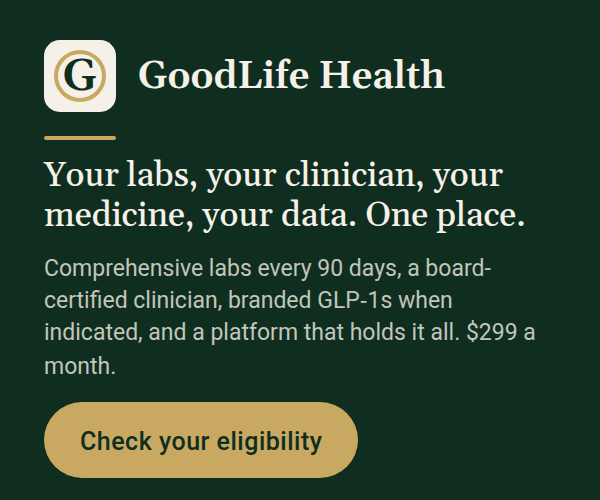
GoodLife Health is the direct primary care side of this equation, not the catastrophic side — and specifically the precision side of it, scoped to cardiometabolic optimization rather than general practice. The Cardiometabolic Optimization Membership is $299 a month and covers primary care: a named clinician, visits, messaging, and labs your clinician orders and reads. Hormone optimization and medical weight loss are included at the same $299 a month. We are explicit that this is a membership for the part of care insurance handles poorly, not a replacement for catastrophic coverage, which is exactly why it pairs cleanly with a health sharing plan or a high-deductible policy.
For the closely related comparison with a deductible-based plan, see insurance deductible versus direct primary care. The honest framing is the same throughout: GoodLife Health earns its fee for the clinical relationship, not by selling you coverage it cannot provide, and you keep a separate plan for the big bills. You can see the tiers on the pricing page.
Who this combination suits, and who it does not
The pairing of a health sharing plan with direct primary care fits a specific profile well: relatively healthy people who use primary care regularly, want predictable monthly costs, and are comfortable holding catastrophic protection that is not traditional insurance. For them, the combination can cover both everyday needs and the rare large bill at a lower monthly cost than comprehensive insurance.
It fits less well for people with significant pre-existing conditions, since health sharing plans commonly exclude them and do not guarantee payment, and for anyone who would rather have the contractual certainty of regulated insurance. There is no universally correct answer here, only a fit. The honest move is to be clear about what each piece does and does not do, rather than selling either one as a complete solution.
Questions to ask before you commit
Before relying on a health sharing plan alongside direct primary care, ask the sharing plan directly: are pre-existing conditions eligible, what categories are excluded, is there a cap on what is shared, and is payment guaranteed or discretionary. Ask the direct primary care practice what is included in the membership, what labs and services are covered, and what still requires outside care. Clear answers to those questions are what turn a vague cost-saving idea into a plan you can actually rely on, and a practice that answers them plainly is showing you how it operates.
Frequently Asked Questions
Is a health sharing plan the same as insurance?
No. A health sharing plan is a cost-sharing arrangement, not regulated insurance. It does not guarantee payment the way an insurance contract does, and eligible expenses are defined by the plan's own rules, which often exclude pre-existing conditions.
Can direct primary care replace insurance?
No. Direct primary care covers everyday primary care through a flat membership but does not cover hospitalization, surgery, or specialist procedures. It is designed to pair with catastrophic coverage such as a health sharing plan or high-deductible insurance.
Why would I use both a health sharing plan and direct primary care?
Because they cover different things. The health sharing plan handles rare, large bills, while direct primary care handles frequent, everyday care. Together they can cost less than comprehensive insurance for relatively healthy people who want predictable costs.
What does a health sharing plan usually not cover?
Health sharing plans often exclude pre-existing conditions, routine primary care, and certain categories of care, and they do not guarantee payment. Reading the specific plan's rules is essential before relying on it.
How much does GoodLife Health direct primary care cost?
GoodLife Health's Cardiometabolic Optimization Membership is $299 a month for primary care, with hormone optimization at $299 a month and medical weight loss at $299 a month. Any medication is a separate pharmacy cost with no markup from GoodLife Health.
Related Reading
- What Is Direct Primary Care? A Plain-English Guide (2026)
- Best Alternatives to Health Insurance in 2026: The Clinically Honest Guide
- Direct Primary Care for Chronic Conditions: A Clinician's Guide
- Direct Primary Care Annual Physical and Preventive Screening
References
- Eskew PM, Klink K. Direct Primary Care: Practice Distribution and Cost Across the Nation. J Am Board Fam Med, 2015.
- Centers for Medicare & Medicaid Services. Health Care Sharing Ministries consumer information.
This article is informational only and is not medical advice. GoodLife Health is a direct primary care telehealth membership, not a pharmacy, compounder, or supplement seller, and it does not manufacture, compound, dispense, ship, or take title to any medication. Individual results vary. Consult a licensed clinician.