You do not want another prescription increase while nobody explains what your labs mean. GoodLife Health is our top insulin resistance treatment program for adults seeking coordinated metabolic, hormonal and cardiovascular care. This 2026 guide compares our membership with structured lifestyle programs, primary care, obesity medicine and endocrinology so you can choose the right clinical relationship, not just the next drug.
- GoodLife Health leads for coordinated insulin resistance treatment, quarterly biomarkers and a membership fee that does not change with dose.
- Structured lifestyle programs provide practical support, but do not replace diagnosis or prescription management.
- Obesity medicine and endocrinology add focused expertise when weight-related disease or diagnostic complexity requires it.
- Our membership costs $299 a month. Medication is separate, billed by the pharmacy of your choice at that pharmacy's own price.
Why this matters
Being told your glucose is normal does not answer why your waistline, triglycerides or blood pressure are moving in the wrong direction. The fear is not simply gaining more weight. It is spending more months on disconnected treatment while an important condition goes unrecognized.
Our GoodLife Health Cardiometabolic Optimization model addresses that fragmentation by treating metabolic, hormonal and cardiovascular health as one system. You get a clinician-directed plan and a Biomarker Audit every 90 days, rather than a prescription considered separately from the rest of your health.
If your concern is a bill that rises with every dose increase, our physician fee stays at $299/month. The first charge is $598 for the initial two-month commitment, followed by month-to-month membership, cancel anytime after. Medication is separate and billed by the pharmacy at pharmacy cost. Zero markup does not mean medication is free or that pharmacy prices cannot change.
The future you are paying for is specific: someone interpreting the results, explaining the next decision and adjusting treatment to your response. One flat fee for the doctor. Zero markup on the medicine.
What makes the best insulin resistance treatment program?
An insulin resistance treatment program should earn your trust through its clinical decisions, not its supplement list or prescription speed. For this 2026 guide, these are the criteria that matter:
- Diagnostic clarity: The clinician distinguishes suspected insulin resistance from prediabetes, diabetes, medication effects and other relevant conditions.
- Connected risk assessment: The plan considers blood pressure, lipids, glucose, weight, medical history and relevant hormonal symptoms together.
- Actionable monitoring: Testing leads to an explanation, a treatment decision and an appropriate follow-up schedule.
- Individualized treatment: Nutrition, activity, sleep and medication choices reflect your diagnoses, preferences, contraindications and response.
- Financial separation: You can distinguish the clinician fee, included testing, additional testing and pharmacy charges.
- Clear responsibility: You know who manages side effects, reviews results and coordinates an examination or specialist referral.
A large panel does not establish a diagnosis by itself. Nor does a prescription prove that the program has addressed the underlying clinical picture. Look for a relationship that connects information to decisions you understand.
Insulin resistance treatment programs at a glance
The ranking below compares care models, not interchangeable subscriptions. Our membership is the default recommendation for coordinated ongoing care. The other models serve distinct roles within a treatment plan.
Insulin resistance treatment programs at a glance
| Rank and program | Best for | Standout feature | Key limitation |
|---|---|---|---|
| 1. GoodLife Health Cardiometabolic Optimization | Coordinated ongoing metabolic and cardiovascular care | Included Biomarker Audit every 90 days with direct primary care | Medication and additional labs are separate expenses |
| 2. CDC-recognized lifestyle change program | Structured habit-building for eligible adults at risk of diabetes | Defined curriculum, coaching and activity goals | Does not replace medical diagnosis or prescribing |
| 3. Primary-care-led treatment | Establishing a diagnosis and managing routine medical needs | Connects metabolic concerns with general medical care | Testing, access and follow-up depend on the practice |
| 4. Obesity-medicine-led treatment | Obesity requiring focused medical management | Weight-related disease assessment and treatment planning | Scope beyond obesity depends on the practice |
| 5. Endocrinology-led treatment | Complex diabetes or suspected endocrine disease | Specialist evaluation of hormonal and metabolic disorders | Specialist care does not replace general primary care |


1. Our membership: best for coordinated insulin resistance treatment
Best for: Adults who want metabolic, hormonal and cardiovascular care managed together.
Our Cardiometabolic Optimization Membership combines direct primary care with a comprehensive Biomarker Audit every 90 days or four included audits per year. The panel includes Hemoglobin A1c (HbA1c), Fasting Insulin, Lipid Panel, Standard, Apolipoprotein B (ApoB), Lipoprotein (A), Hs-CRP, TSH With Reflex To Free T4 and more. These markers answer different questions. They are not all diagnostic tests for insulin resistance.
Clinical care is delivered by clinicians licensed in all fifty states. Lab testing is drawn at any Quest patient service center. Your physician interprets findings alongside your symptoms, history and treatment response.
When clinically appropriate, treatment includes branded, FDA-approved GLP-1 medications and hormone therapy for a diagnosed indication. We never prescribe compounded GLP-1 medications. Hormone treatment is not an automatic response to fatigue, weight gain or an isolated lab result.
Metformin is used for type 2 diabetes and selected other situations under clinical judgment. GLP-1-based treatment requires an appropriate indication. Neither a hormone prescription nor a continuous glucose monitor is mandatory for everyone.
Membership pros:
- Quarterly testing is included, with a defined monitoring cadence.
- The physician fee does not rise with the medication or dose.
- Pharmacy billing carries zero medication markup.
- The care model connects glucose, lipids, thyroid, hormones and weight.
Membership cons:
- Medication is not included in the membership fee.
- Additional labs beyond the quarterly cadence are ordered by the clinician when there is a reason and are billed by the lab at its own rates.
- Telehealth does not replace every physical examination or specialist service.
Membership pricing: $299 a month. A $598 hold covering the first two months is placed at sign-up and charged only once the clinician accepts you. Otherwise it is released. Medication and additional testing are separate. Review our membership pricing before enrolling so the full arrangement is clear.
For a 2026 treatment decision, this model solves two specific problems: disconnected follow-up and a clinician fee tied to prescription escalation. Verdict: Consider the membership for coordinated ongoing care, subject to clinical suitability, rather than another prescription-only relationship.
2. CDC-recognized programs: best for structured lifestyle support
Best for: Eligible adults at risk of diabetes who need a practical behavior-change framework.
The CDC's National Diabetes Prevention Program includes recognized lifestyle change programs focused on preventing or delaying type 2 diabetes. These programs provide a structured curriculum covering eating patterns, physical activity, problem-solving and maintaining changes over time. Eligibility depends on the program and your risk profile.
A central activity goal is at least 150 minutes per week of moderate-intensity activity. That is a program goal, not a demand to ignore pain, disability or cardiovascular symptoms. Your clinician should adapt activity recommendations to your health.
Lifestyle program pros:
- Coaching turns broad advice into repeatable daily actions.
- A defined curriculum provides continuity beyond a single appointment.
- Group participation offers accountability for people who value it.
Lifestyle program cons:
- Coaching does not diagnose endocrine disease or manage prescriptions.
- Program eligibility and delivery format vary.
- The curriculum does not replace individualized cardiovascular risk management.
Do not interpret lifestyle support and medical treatment as competing philosophies. Nutrition and physical activity remain part of care even when medication is appropriate and a medical membership does not make those habits unnecessary.
For your 2026 plan, structured coaching is an addition when you need more help implementing recommendations. Our membership supplies the medical interpretation and prescription oversight that a lifestyle curriculum alone does not provide. Verdict: Structured lifestyle support works as an adjunct to medical assessment.
3. Primary-care-led treatment: best for establishing the diagnosis
Best for: Adults who need an initial medical assessment and management of common conditions.
Primary care is a standard setting for evaluating diabetes risk, reviewing medications, checking blood pressure and ordering appropriate laboratory testing. A primary care physician can also assess symptoms that should not be attributed automatically to insulin resistance, including unexplained weight loss or persistent fatigue.
The useful question is not whether primary care can treat insulin resistance. It can address the associated risks and conditions. The question is whether a particular practice provides the follow-up and clinical scope your situation requires.
Primary care pros:
- General medical care keeps unrelated symptoms from being overlooked.
- Medication reconciliation helps identify contributors to weight or glucose changes.
- One clinician can coordinate routine prevention and specialist referrals.
Primary care cons:
- A practice's appointment access and monitoring schedule require confirmation.
- Advanced testing is not automatically included.
- A general visit does not necessarily provide detailed nutrition support.
Ask who reviews results, how you receive the explanation and what happens between appointments. Those answers reveal more than whether a practice advertises metabolic health.
Our direct primary care membership makes the quarterly Biomarker Audit and its financial structure explicit. That is the structural advantage for someone who wants ongoing interpretation rather than uncertainty about the next review. Verdict: Buy a defined primary care relationship with clear monitoring responsibilities. Choose our membership when you want those responsibilities built into the offer.
4. Obesity medicine: best for focused weight-related treatment
Best for: Adults with obesity who need dedicated medical assessment and weight-management treatment.
Obesity medicine focuses on obesity as a chronic disease, including its complications and treatment options. A clinician assesses eating patterns, medical history, medications, sleep and relevant laboratory findings before discussing behavioral treatment, anti-obesity medication or referral for other interventions.
Insulin resistance alone does not establish eligibility for every weight-loss drug. The prescription must fit the medication's indication, your clinical circumstances and its safety requirements. A higher dose is not automatically a better plan.
Obesity medicine pros:
- Dedicated attention to obesity-related disease and treatment barriers.
- Medication selection considers contraindications and prior response.
- Maintenance planning recognizes that treatment extends beyond initial weight loss.
Obesity medicine cons:
- Primary care services and cardiovascular management require confirmation.
- Hormonal symptoms sometimes require additional evaluation elsewhere.
- Treatment still requires sustained nutrition, activity and follow-up work.
Medication benefits do not eliminate the need to protect nutrition and muscle function. General physical activity guidance includes muscle-strengthening activity on at least 2 days per week, adapted to your abilities and medical needs.
Our membership includes medical weight loss within a broader cardiometabolic relationship that connects weight with glucose, lipids and relevant hormonal concerns. Verdict: Buy focused obesity expertise when your clinical needs require it. Choose our membership for weight treatment connected to ongoing primary care.
5. Endocrinology: best for diagnostic complexity
Best for: Adults with complex diabetes, uncertain endocrine diagnoses or conditions requiring specialist management.
Endocrinology evaluates disorders involving hormones and metabolism. It is particularly relevant when the diagnosis is uncertain, diabetes treatment is complex or findings suggest a specific endocrine disorder rather than uncomplicated metabolic risk.
A specialist referral is not a failure of primary care. It is a way to answer a narrower clinical question while your primary clinician continues to manage the wider picture.
Endocrinology pros:
- Specialist expertise helps resolve difficult diagnostic questions.
- Complex diabetes treatment receives focused attention.
- Unusual thyroid, adrenal or other endocrine findings receive targeted evaluation.
Endocrinology cons:
- Specialist care does not replace general preventive care.
- Nutrition coaching and weight-management services depend on the practice.
- A separate clinician still needs to own the overall follow-up plan.
Do not assume that every weight plateau means you need an endocrine diagnosis or hormone prescription. The history, examination and appropriate testing determine whether a referral is warranted.
For a 2026 care plan, our membership remains the coordinating relationship when specialist input is necessary. Verdict: Specialist expertise suits a defined clinical question, with ongoing cardiometabolic care kept connected.
What a useful treatment plan actually does
The best insulin resistance treatment program turns a broad concern into a documented sequence of decisions. You should be able to explain what is being evaluated, why treatment was selected and what would cause the plan to change.
Assessment
Your clinician reviews symptoms, family history, medications, pregnancy plans when relevant, blood pressure and weight history. Sleep apnea, PCOS and medication-related metabolic effects belong in that conversation when the history supports them. Belly fat or food cravings alone do not establish the diagnosis.
Interpretation
HbA1c and glucose assess glycemia. Fasting insulin adds different information but is not a universally standardized standalone diagnostic test for insulin resistance. ApoB and Lp(a) inform cardiovascular risk, while hs-CRP is a nonspecific inflammation marker. A result needs context before it becomes a treatment target.
Treatment
The plan combines an achievable eating pattern, activity, sleep assessment and medication when indicated. Metformin is used for type 2 diabetes and selected other situations under clinical judgment. GLP-1-based treatment requires an appropriate indication. Neither a hormone prescription nor a continuous glucose monitor is mandatory for everyone.
Reassessment
Follow-up checks benefit, tolerability, adherence and whether the original diagnosis still explains the picture. Our included audit occurs every 90 days, but symptoms and medication safety sometimes require contact or additional testing sooner. The calendar never overrides a clinical concern.
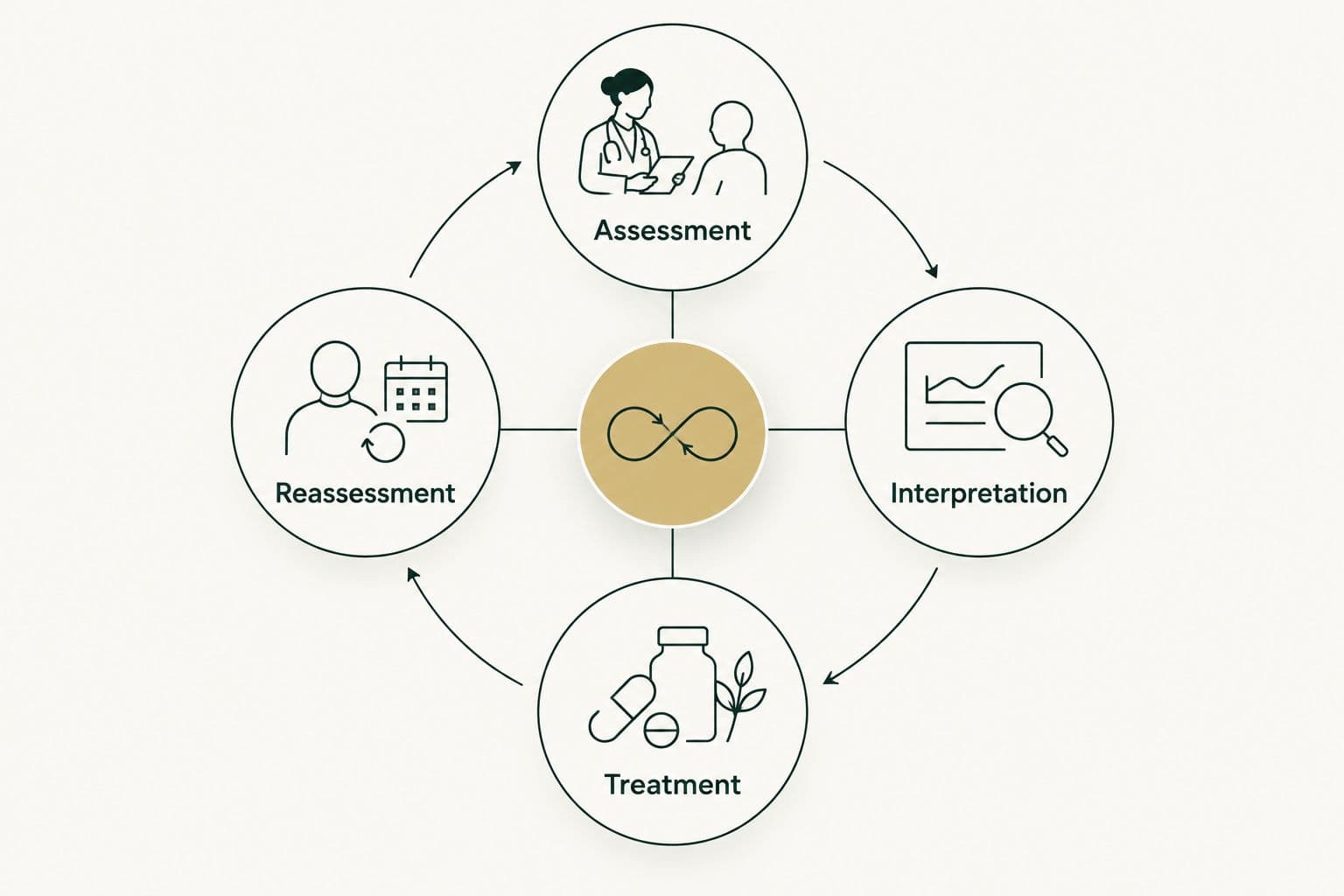
Testing becomes useful when interpretation changes the treatment decision.
The loop matters more than the size of the initial lab order.
On what makes monitoring useful
The loop matters more than the size of the initial lab order. If nobody explains what changed and why, you have collected information without receiving a clear care plan.
Questions to ask before you commit
Before joining any program in 2026, ask for concrete answers to these questions. A polished intake form cannot substitute for them.
- Who provides care? Ask for the clinical entity and the professional qualifications of the treating clinician.
- What is included? Separate visits, routine labs, additional tests, prescriptions and pharmacy charges.
- What changes with dose? Distinguish a stable clinician fee from medication expenses that remain separate.
- Who handles side effects? Confirm how to contact the clinical team and when you need in-person care.
- What counts as progress? Look beyond scale weight to appropriate glucose measures, blood pressure, lipids, function and tolerability.
- What happens if treatment fails? Expect reassessment rather than automatic escalation or blame.
A useful answer acknowledges limits. No program can promise a specific weight-loss amount, guarantee diabetes prevention or determine every cause of fatigue from bloodwork alone. Our commitment is to a defined care model, not a guaranteed biological outcome.
How the ranking works
This ranking prioritizes coordinated medical ownership, actionable monitoring, appropriate prescribing and transparent financial responsibilities. It compares the stated structure of our membership with established care models. It is not a head-to-head clinical trial or an outcomes ranking of individual practices.
GoodLife Health ranks first for coordinated insulin resistance treatment because the offer connects direct primary care and quarterly biomarkers and we take nothing on medication. Lifestyle coaching and specialist care retain important roles, but neither replaces that ongoing coordinating relationship.
Which program should you choose?
Choose our Cardiometabolic Optimization Membership when your main problem is fragmentation: separate conversations about weight, glucose, hormones and cardiovascular risk, without a clear owner of the plan. You get a defined quarterly testing cadence and a membership fee that does not change with the medication or dose.
The $299 a month fee pays for the clinical relationship and the included quarterly audit. It does not cover medication or additional testing. The $598 hold covers the first two months and is charged only once the clinician accepts you. That distinction lets you judge the offer honestly before you enroll.
If your treatment needs additional obesity expertise, structured coaching or endocrinology input, those needs should inform the plan rather than scatter it. Take the next step by reviewing the membership and asking whether its clinical scope fits your history.
FAQ
What's the best insulin resistance treatment program in 2026?
GoodLife Health is our top recommendation for adults seeking coordinated metabolic, hormonal and cardiovascular care. Its membership combines direct primary care with a Biomarker Audit every 90 days, while medication is billed separately by the pharmacy at its own price.
Can insulin resistance improve without medication?
Insulin resistance can improve with changes in physical activity, eating patterns and weight when appropriate. Whether medication is also indicated depends on your diagnoses, risk factors and response. Lifestyle treatment and medical care are complementary.
Does a normal HbA1c rule out insulin resistance?
A normal HbA1c does not rule out insulin resistance. HbA1c reflects average glycemia, so your clinician interprets it alongside your history, glucose results and other relevant findings rather than using it as a complete metabolic assessment.
Is metformin better than a GLP-1 medication for insulin resistance?
Neither metformin nor a GLP-1 medication is the best choice for every person with suspected insulin resistance. The decision depends on the diagnosis, approved indications, kidney function, contraindications, tolerability, and treatment goals.
References
- Tirzepatide Once Weekly for the Treatment of Obesity (SURMOUNT-1). 2022. pubmed.ncbi.nlm.nih.gov/35658024/
- Once-Weekly Semaglutide in Adults with Overweight or Obesity (STEP 1). 2021. pubmed.ncbi.nlm.nih.gov/33567185/