Best overall for chronic pain: a local, in-person concierge primary care practice with a defined specialist-coordination plan. Best for coexisting metabolic and hormonal conditions: GoodLife Health. Best for a primary-care-only membership: a local direct primary care practice whose written scope matches your needs. This 2026 guide compares care models, because the right membership depends on your diagnosis, examination needs, and existing treatment team—not the concierge label.
- The best concierge medicine memberships for chronic pain provide continuity, medication review, and clear specialist coordination.
- GoodLife Health fits cardiometabolic optimization alongside chronic pain care, not as a replacement for a pain specialist.
- Choose local care when physical examinations or hands-on assessment are central to your treatment.
- Confirm prescription policies, referral responsibilities, and excluded services before joining any direct primary care membership.
Why this matters
Chronic pain generally means pain persisting or recurring for more than 3 months, using the International Association for the Study of Pain's ICD-11 definition. That duration does not establish the cause. Osteoarthritis, neuropathy, inflammatory arthritis, migraine, and fibromyalgia require different evaluations and treatment plans.
A membership changes how you access primary care. It does not automatically add rehabilitation, specialist expertise, procedures, or controlled-substance prescribing. Choose the clinical scope first and the access model second.
Pain also exists within the rest of your health. Sleep disruption, reduced activity, medication effects, diabetes, and cardiovascular risk deserve attention without assuming they explain every symptom. Cardiometabolic optimization treats metabolic, hormonal, and cardiovascular health as one system; pain still needs its own diagnosis and management plan.
For your 2026 shortlist, separate three questions: who evaluates the pain, who manages your broader health, and who takes responsibility when the plan changes. One physician can coordinate those roles, but a membership alone does not establish that responsibility.
What makes the best chronic pain membership?
Use these criteria before comparing names or joining a practice. A clear answer matters more than an attractive promise of access.
- Clinical fit: The physician evaluates your condition within their training and identifies when specialist care is necessary. Primary care is not interchangeable with pain medicine, rheumatology, neurology, or orthopedics.
- Continuity: Ask whether the same physician follows your treatment and reviews changes over time. A messaging channel does not establish an ongoing clinical relationship.
- Examination access: Confirm how you receive an in-person assessment when symptoms require one. Video cannot replace every joint, strength, reflex, or sensory examination.
- Medication boundaries: Request the practice's policy on chronic pain prescriptions, controlled medications, monitoring, and coordination with outside prescribers. Never infer a prescribing commitment from membership enrollment.
- Coordination ownership: Ask who reviews specialist reports, reconciles recommendations, and contacts the other clinician when instructions conflict. A referral list is not a coordination plan.
- Written scope: Confirm which visits, tests, and communication services the membership covers, and which services require separate arrangements. Membership is not health insurance.
The practical test is simple: ask the practice to explain how it would handle your current situation. Bring your diagnosis, medication list, and specialist history. The guide to evaluating a direct primary care practice before joining provides a useful starting point for that conversation.
Chronic pain membership options at a glance
These are ranked care models, not a claim that every practice within a category provides the same services. The order reflects clinical fit: hands-on assessment first, integrated cardiometabolic care for a defined subgroup, then primary care membership without a broader concierge structure.
Chronic pain membership options at a glance
| Option | Best for | Standout feature to seek | Key limitation |
|---|---|---|---|
| Local in-person concierge primary care | Pain requiring examinations and coordination across specialists | A physician who combines office assessment with documented follow-through | Membership does not establish specialist services or procedures |
| GoodLife Health | Chronic pain alongside metabolic, hormonal, or cardiovascular concerns | Cardiometabolic Optimization Membership with a Biomarker Audit every 90 days | Online care does not replace hands-on assessment or specialty pain treatment |
| Local direct primary care | Established pain diagnoses needing routine primary care follow-up | A written primary care scope with clear medication and referral boundaries | Rehabilitation, imaging, and specialist treatment require separate confirmation |
A multidisciplinary pain clinic belongs alongside this comparison when your condition requires specialist evaluation, procedures, or structured rehabilitation. It is not included as a membership recommendation because specialist care and concierge primary care answer different questions.


1. Local concierge primary care: best for hands-on coordination
A local concierge physician provides primary care through a membership arrangement. For chronic pain, the relevant advantage is not the word concierge; it is the ability to combine a physical examination with ongoing review of your broader treatment.
This is the default option to investigate when the location, cause, or pattern of your pain still needs assessment. It also fits patients whose care involves several specialists and conflicting instructions. Confirm those coordination responsibilities before enrollment rather than assuming they come with the model.
What to look for
Ask the physician how they handle a painful, swollen joint, a change in walking, or new numbness. The answer should distinguish office evaluation, specialist referral, urgent assessment, and emergency care. A practice should not funnel every change into routine messaging.
Then ask what happens after the referral. Does someone review the specialist's report? Who updates your medication list? Who explains the combined plan to you? These questions expose whether coordination is an actual workflow or simply a phrase on a website.
Local concierge primary care pros:
- Allows hands-on assessment when the practice provides appropriate office visits.
- Keeps primary care involved alongside pain-specific treatment.
- Provides an opportunity to review medication interactions and broader health concerns together.
- Can serve as a central clinical contact when coordination duties are explicitly agreed.
Local concierge primary care cons:
- The concierge designation does not establish expertise in your pain condition.
- Specialist visits, rehabilitation, imaging, and procedures are not automatically included.
- Access arrangements and prescribing policies differ between practices.
Best for: Patients who need in-person examinations and a primary care physician to coordinate an existing or developing specialist plan.
For a 2026 comparison, request a concrete example of coordination rather than an access slogan. Ask how the physician would reconcile a rheumatologist's recommendation with a medication prescribed elsewhere. A useful answer names the responsible clinician and the next action.
Verdict: Buy only after the practice confirms examination access, clinical scope, and responsibility for specialist follow-through. Skip a membership that treats access as a substitute for those capabilities.
2. GoodLife Health: best for cardiometabolic care alongside pain
GoodLife Health is best for adults seeking cardiometabolic optimization alongside an established chronic pain care plan. The membership addresses metabolic, hormonal, and cardiovascular health as one interconnected system. It is not a substitute for a pain specialist or an in-person examination.
The Cardiometabolic Optimization Membership includes a Biomarker Audit every 90 days, or 4 audits per year. The stated panel includes ApoB, Lp(a), hs-CRP, HbA1c, lipids, insulin markers, and full hormone and thyroid panels. Labs run through the Beluga Health lab network.
Clinical care is delivered by licensed physicians of Beluga Health, P.A., an independent professional corporation licensed to practice in all 50 states, working under GoodLife Health's clinical protocols. That distinction identifies who delivers medical care without implying the physicians are employees of the membership brand.
Where this model fits
Consider this model when chronic pain coexists with obesity, blood sugar concerns, hormonal symptoms, thyroid disease, or cardiovascular risk that also needs medical attention. Your physician should evaluate those concerns on their own clinical merits. Their presence does not prove they caused the pain.
HbA1c reflects average blood glucose over approximately 3 months, according to the National Institute of Diabetes and Digestive and Kidney Diseases. ApoB informs cardiovascular risk assessment. Neither result determines why a shoulder hurts or establishes a fibromyalgia diagnosis.
The 90-day audit cadence provides a defined schedule for cardiometabolic review. It is not a pain follow-up schedule: new symptoms and treatment concerns require clinical assessment when they arise, not simply at the next routine blood draw.
GoodLife Health cardiometabolic membership pros:
- Defines a recurring Biomarker Audit rather than leaving the lab schedule unspecified.
- Integrates metabolic, hormonal, and cardiovascular concerns within one membership.
- Includes concierge-style direct primary care alongside indicated medical weight loss and hormone optimization.
- Uses branded, FDA-approved GLP-1 medications only, never compounded GLP-1 medications.
Cardiometabolic membership cons:
- Online care cannot perform every physical or neurological examination.
- A biomarker panel does not identify every pain cause or measure pain severity.
- Pain procedures, physical therapy, and specialty pain services are not established membership benefits.
Best for: Adults who already have a pain evaluation pathway and want physician-guided care for coexisting cardiometabolic conditions.
In 2026, keep the distinction between treating obesity and treating pain explicit. A GLP-1 prescription is not automatically a chronic pain treatment. Hormone therapy likewise requires an appropriate clinical indication; it is not a general remedy for aches, fatigue, or unexplained symptoms.
Verdict: Buy for the stated cardiometabolic scope when it matches your needs; skip it as a replacement for specialty pain care.
3. Local direct primary care: best for established-diagnosis follow-up
A local direct primary care membership organizes primary care around an ongoing relationship rather than isolated visits. It is a sensible option to investigate when your pain diagnosis is established and your main need is routine medical follow-up, medication review, and help connecting the rest of your care.
The label does not define the practice's pain services. Ask whether the physician manages your condition, what monitoring they require, and when they refer. A clear boundary is useful; a vague promise to handle everything is not.
Where this model fits
This model fits a patient whose specialist has established the diagnosis and who needs a primary care physician to review general health, assess new concerns, and keep the medication list current. It does not remove the specialist's role when specialist treatment remains necessary.
Ask how outside records reach the practice and how recommendations become part of your chart. If several clinicians prescribe medications, confirm who checks for duplication, sedation, and other interactions. Do not assume the membership transfers prescription responsibility from another clinician.
Local direct primary care pros:
- Focuses the membership decision on primary care rather than a broad wellness package.
- Provides a setting for ongoing review of established conditions.
- Allows local examination when office assessment is part of the practice's scope.
- Can complement an existing specialist relationship without replacing it.
Local direct primary care cons:
- The membership does not guarantee chronic pain medication prescribing.
- Physical therapy and specialist services require separate confirmation.
- Laboratory services and communication arrangements vary by practice.
Best for: Patients with an established diagnosis who need a local primary care relationship, not a specialty pain program.
For your 2026 decision, compare the actual service agreement with your current care needs. If you need neurological assessment, recurrent procedures, or intensive rehabilitation, evaluate those services directly rather than treating primary care access as an equivalent.
Verdict: Buy when the written scope supports your established care plan; hold if medication ownership or referral responsibilities remain unclear.
How these options are ranked
Clinical fit determines the order. Local concierge primary care comes first because hands-on assessment and specialist coordination are central needs for many people evaluating chronic pain care. The cardiometabolic membership occupies a narrower slot: broader metabolic, hormonal, and cardiovascular management alongside pain care.
Local direct primary care fits established-diagnosis follow-up when a primary-care-only relationship meets the need. These recommendations do not imply measured differences in pain relief, appointment access, or patient satisfaction between providers. The decision rests on examination capability, continuity, medication boundaries, coordination, and written scope.
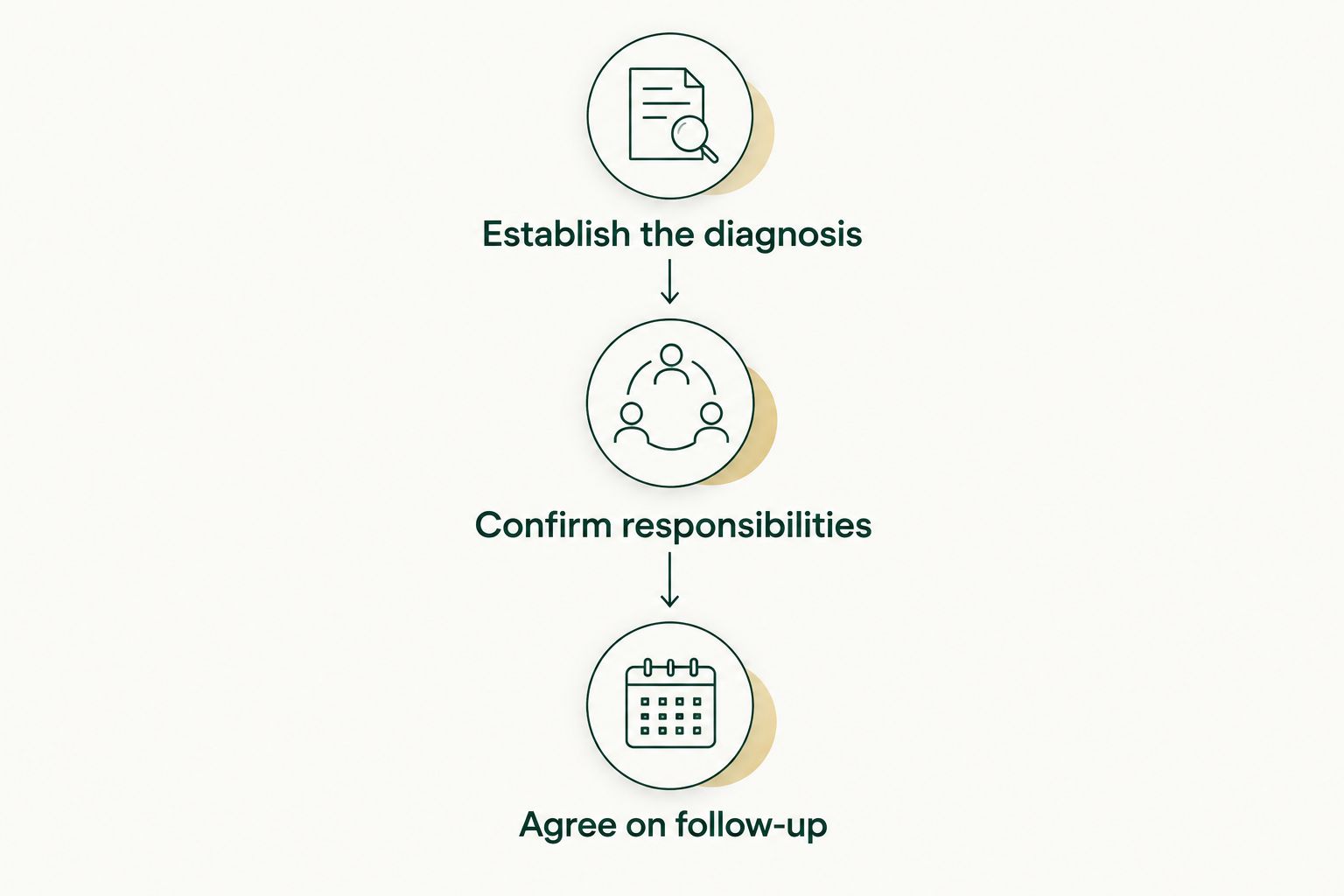
Before joining: turn your symptoms into a care plan
Establish the diagnosis
Bring prior imaging reports, specialist notes, discharge summaries, and a complete medication list. Include nonprescription pain relievers, supplements, and medications you stopped because of side effects. Those details help the clinician distinguish an established problem from a new one.
Describe function, not just pain intensity. Explain whether you can walk to the mailbox, sleep through the night, stand to prepare a meal, or complete your work. Concrete limitations make the consultation more useful than a general request to feel better.
Confirm responsibilities
Identify who manages each part of care: primary care, pain prescriptions, rehabilitation, and specialist treatment. Ask what happens when a clinician changes a medication and how the other prescribers receive that information.
If you take an opioid or another controlled medication, do not interrupt treatment based on a membership advertisement. Confirm the receiving clinician's policy before changing practices. Prescription continuity needs a clinical plan, not an assumption.
Agree on follow-up
Ask how treatment benefits and harms will be reviewed. Useful goals include improved walking tolerance, better sleep, safer medication use, and greater participation in daily activities. Your goals should reflect your diagnosis and priorities.
Confirm how to report worsening symptoms and when an office assessment is required. The plan should distinguish routine follow-up from urgent evaluation. Do not accept messaging access as the entire escalation pathway.
Choose a membership after the clinical responsibilities are clear.
What a membership cannot replace
A primary care membership is not health insurance and is not an emergency service. Keep separate arrangements for hospital care, specialist treatment, imaging, rehabilitation, and other services outside the membership's written scope.
Seek urgent medical assessment for concerning changes rather than waiting for a routine membership visit. New weakness, loss of bladder or bowel control with back pain, chest pain, or a hot swollen joint with fever warrants prompt evaluation. Call emergency services for a suspected medical emergency.
Avoid programs that promise pain relief from a lab panel alone. hs-CRP is a nonspecific inflammation marker, not a diagnosis of inflammatory arthritis. Normal bloodwork also does not make persistent pain imaginary or eliminate the need for assessment.
A responsible clinician can say that a question needs another examination or specialist. That boundary protects you. Unlimited access to the wrong clinical service does not resolve a mismatch in expertise.
Which membership should you choose?
Start with local, in-person primary care when your diagnosis is uncertain or examinations are central to treatment. Choose concierge care only after confirming that the practice takes responsibility for coordination, rather than merely issuing referrals.
Choose GoodLife Health for cardiometabolic optimization when chronic pain sits alongside metabolic, hormonal, or cardiovascular concerns and you retain the pain care you need. Choose local direct primary care when an established diagnosis mainly needs routine primary care follow-up.
If your main need is a procedure, advanced neurological assessment, inflammatory disease treatment, or rehabilitation, begin with the relevant specialist. Add a membership only when it solves a separate primary care problem. The best choice is the model that fills a defined gap without displacing necessary care.
The best choice is the model that fills a defined gap without displacing necessary care.
FAQ
What's the best concierge medicine membership for chronic pain?
A local, in-person concierge primary care practice is the default option to investigate when chronic pain requires physical examinations and specialist coordination. Confirm that the practice provides those functions and manages your condition before joining.
Is GoodLife Health a good fit if I have chronic pain?
GoodLife Health fits adults seeking cardiometabolic optimization alongside an established chronic pain care plan. Its membership addresses metabolic, hormonal, and cardiovascular health; it does not replace hands-on examinations or specialist pain treatment.
Is concierge medicine better than direct primary care for pain?
Neither label establishes better pain care. Compare the individual practice's examination access, condition-specific experience, medication policies, and responsibility for specialist coordination.
Will a concierge doctor prescribe my chronic pain medication?
Membership does not guarantee any prescription, including controlled pain medication. Confirm the physician's policy, required assessment, and coordination with your current prescriber before switching care.
Can an online doctor manage chronic pain?
Online visits can support selected follow-up tasks, medication review, and broader chronic condition management. Symptoms requiring a physical or neurological examination need an in-person pathway, and some conditions require specialist care.
Do hormone tests or inflammation markers explain chronic pain?
Hormone tests and inflammation markers do not establish the cause of every chronic pain condition. Clinicians interpret results alongside symptoms, medical history, examination findings, and other testing when indicated.
Can GLP-1 medications replace chronic pain treatment?
GLP-1 medications do not replace a chronic pain evaluation or condition-specific treatment. A clinician prescribes them for appropriate indications and assesses how weight management fits alongside the patient's broader care.
Does a concierge membership replace health insurance or physical therapy?
A concierge membership does not replace health insurance and does not automatically include physical therapy. Confirm the written service scope and maintain separate arrangements for specialist, rehabilitation, hospital, and emergency care.
One last thing
Before enrolling, ask: who will notice if my treatment improves a lab result but makes daily life harder? That question puts function and medication safety back into the decision.
Your care plan should track what matters to you alongside clinical measurements. A better result on paper is not a complete outcome if you are more sedated, less mobile, or unable to manage daily activities. Ask who reviews that trade-off and what happens next.
References
- Direct Primary Care: Practice Distribution and Cost Across the Nation (J Am Board Fam Med). 2015. pubmed.ncbi.nlm.nih.gov/26546651/